English
  Deutsch














Digital Signage, Video Walls and LED Displays

Separate the content-management requirement from the display technology and physical layout.
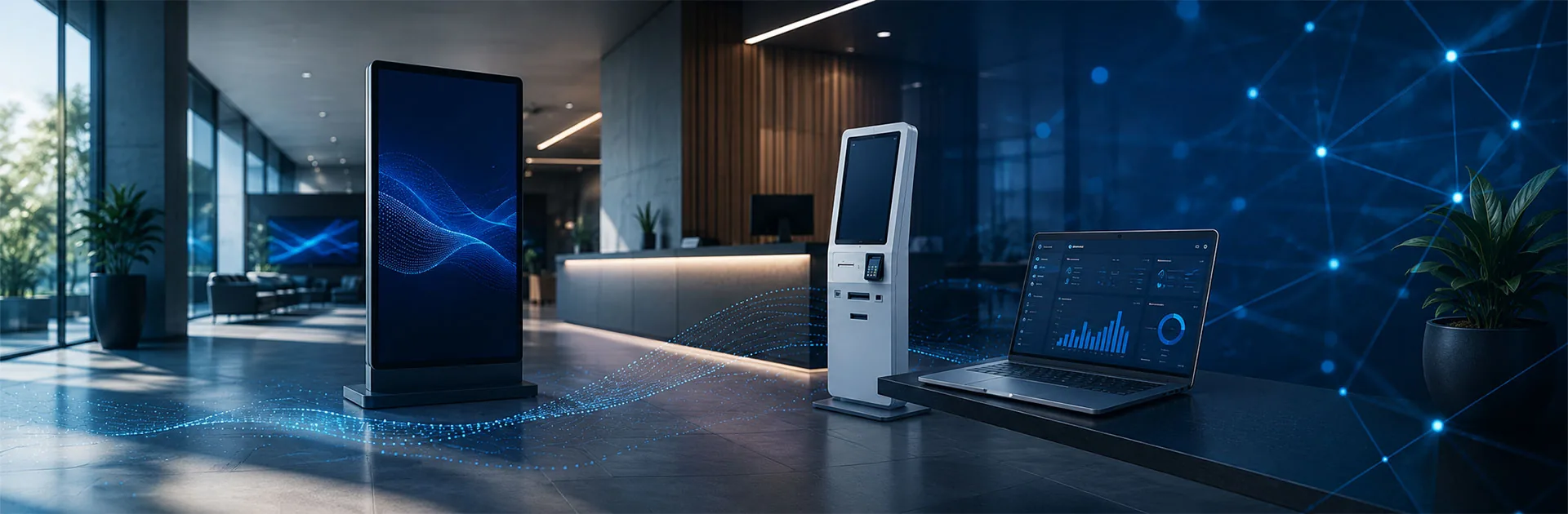
A useful comparison starts by understanding how they can work together. An LED video wall can form the display surface of a digital signage system, while a single professional screen can also operate within a managed publishing infrastructure.
What does digital signage describe?
Digital signage covers the preparation, distribution and management of content shown on electronic displays. Screens, playback infrastructure and software are considered together. Digital signage software is therefore a publishing and content management layer, not a panel technology.
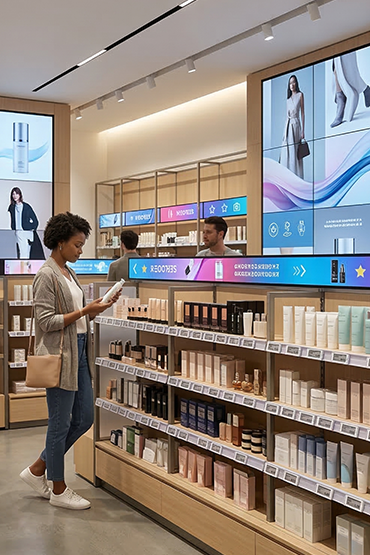
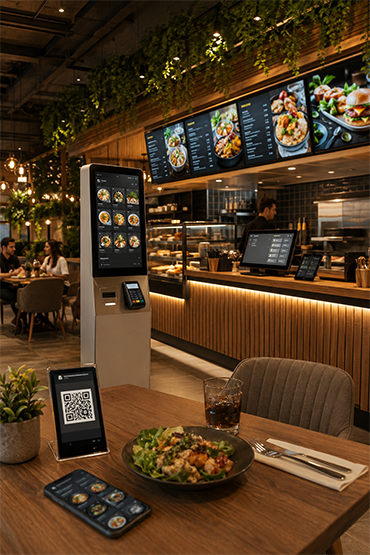
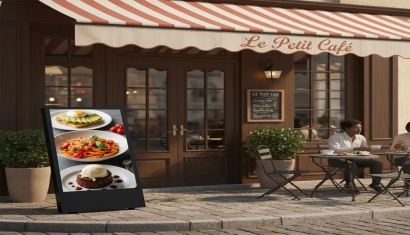
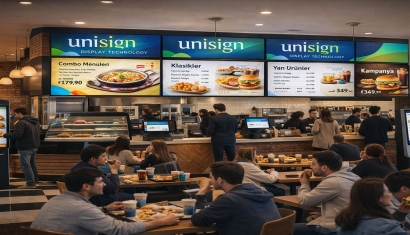
Restaurant menus, corporate notices and retail campaigns are different communication purposes that can be planned within this approach. Start the brief with the message and location. Select the screen technology afterwards according to the environment and information requirements.
What is a video wall?
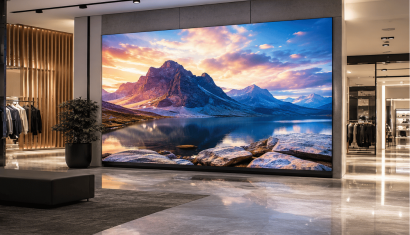
A video wall combines multiple display units into a larger visual surface. LCD panels can be arranged in rows and columns. Narrow bezels reduce the interruption between panels, but do not mean the panel boundaries cease to exist.
For example, a 2×2 arrangement contains four units and a 3×3 arrangement contains nine. The surface can be planned for one large image or, with appropriate control infrastructure, multiple content regions. Define how many sources must appear at the same time and how layouts will change before requesting equipment.
What does Direct View LED mean?
In Direct View LED, the LEDs produce the image light directly. LCD instead controls light from a backlight through a liquid-crystal layer. The two technologies therefore create the displayed image through different structures.
LED modules and cabinets can be assembled into larger display surfaces. Pixel pitch describes centre-to-centre spacing between neighbouring image pixels and should be evaluated with viewing distance.
Test the smallest text in the intended content instead of choosing solely by overall screen dimensions.
Is an LED television the same as an LED wall?
The term LED in a product name does not always identify Direct View LED. In LED/LCD televisions, LEDs provide the backlight. A quotation saying only LED screen may therefore be insufficient to establish the display technology.
Request manufacturer, model and technical type explicitly. Determine whether the proposal includes LCD video wall panels or direct-emissive LED modules. Comparing different components under the same loose label can create misleading expectations about both image characteristics and cost.
How should LCD and LED video walls be compared?
For LCD, examine panel dimensions, bezel transitions, brightness and colour matching. For LED, ask about module dimensions, pixel pitch, servicing and total resolution. Both require assessment of operating conditions, mounting, content sources and maintenance access.
Avoid blanket conclusions such as LED always costs less or LCD is always sharper. Compare equivalent size, viewing distance and actual content. Close-range data tables and promotional video viewed from farther away may lead to different selections. Include both in the demonstration when the project needs them.
Do a controller and a CMS perform the same role?
Managing publication timing and distributing images across screens or regions are different tasks. Specify publishing and image-control requirements separately.
The LG 55VL5PJ-A offers built-in SoC and daisy-chain support.
Determine whether external control hardware is needed from source and layout requirements.
Describe single-source, multi-source, live-video, layout and synchronization requirements. Do not assume simultaneous display of several sources follows automatically from the number of screens. Review the connection and control design with the technical team.
Which route fits the project?
For a small menu point, first assess a single-screen arrangement. For a large operational display, prioritise source count and information layout. For a visual surface shaped around the architecture, consider dimensions and viewing distance early. These are planning examples rather than universal technology prescriptions.
Explore Video Wall Solutions for system planning, Video Wall Displays for panel choices and indoor LED displays for LED alternatives. Digital signage software should be assessed as part of the publishing workflow around the chosen hardware. The three terms then become different decisions within one project, rather than inaccurate substitutes for each other.
Frequently Asked Questions
Does digital signage require a video wall?
No. It can be planned around a single screen. A video wall is an arrangement to assess when a larger or multi-source visual area is needed.
Must a video wall use LCD panels?
No. Large display walls can also be built from Direct View LED modules. The proposed technology should be clearly identified.
Is an LED television the same as Direct View LED?
No. LED backlighting in an LCD television and the emissive pixels of Direct View LED are different structures.
Does every video wall need a separate controller?
Not always. Check built-in daisy-chain functions and the required sources and layouts.
Which option is more economical?
Compare equivalent dimensions, content, viewing distance, control and service scope. The technology name alone does not determine total project cost.
Choose by the application
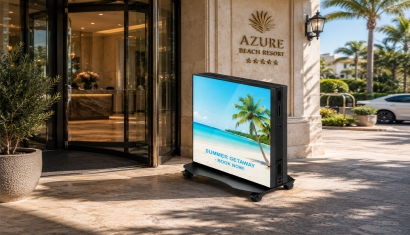
A signage project may use one screen, a tiled video wall or an LED surface. Define the intended content, viewing distance, available area and service access before comparing options. Confirm resolution and mounting for the actual configuration. A larger surface alone does not guarantee more effective communication.
Explore Related Solutions: Videowall Screens · Indoor LED Screens · Digital Signage Software








.png.webp&w=410&h=235 "DSFeed Content Management and Monitoring Service")